

Independent Project Assurance Services: An Australian Buyer’s Guide
What good is an independent review if its findings arrive too late to change a decision? The value of independent project assurance services lies not in another status report, but in objective challenge that helps leaders identify material risks and decide what to do next. A useful review tests assumptions and considers evidence, while leaving project management and decision-making responsibilities with the people accountable for them.
This Australian buyer’s guide explains what assurance can and can’t do, how to assess a review partner’s independence and experience, and how to define a scope that produces useful findings. You’ll also learn what evidence to prepare and how to connect recommendations to governance and delivery decisions. Yellowhouse lists Gateway assurance as an advisory service. Before engaging, confirm the specific scope, outputs and delivery approach.
Key Takeaways
- Use independent project assurance services to support informed oversight, not to replace project management or routine audit.
- Before choosing a provider, clarify the decisions the review needs to inform and ask how actual or perceived conflicts of interest will be managed.
- Agree on the review scope, access to information and reporting arrangements so the work fits your project stage and governance needs.
- Turn findings into agreed actions by assessing their implications, assigning owners and tracking responses. Accountability remains with decision-makers.
What independent project assurance services do, and when projects need them
Independent project assurance is an objective review of a project’s health, risks and readiness. It helps the people overseeing the work make informed decisions. Unlike project management, assurance doesn’t plan or deliver the project. It provides challenge and insight so accountable leaders can decide whether to continue, change course or address an emerging issue. For a neutral overview of the concept, see Project assurance.
Assurance is also different from routine reporting, which tracks progress against plans, and from audit, which typically examines records, controls or compliance against defined criteria. A review may consider whether plans and controls appear credible, but it doesn’t take over management responsibilities or guarantee success.
For Canberra organisations, a review may be useful before a major investment or delivery decision, after a change in project scope or conditions, or when delays, risks or stakeholder concerns raise questions about confidence. The aim is to surface issues while leaders still have choices, not simply document what has already happened.
What does independence mean in a project assurance review?
Reviewers need to be sufficiently separate from the work they assess to question assumptions and provide objective challenge. Ask about actual or perceived conflicts of interest, who the reviewers report to, and whether they can speak with people responsible for project decisions. Agree on how significant concerns will be raised with decision-makers.
Independence alone doesn’t establish relevant capability or guarantee project success. Assess the reviewer’s experience with comparable projects and check that the proposed scope addresses your needs. Yellowhouse lists Gateway assurance as an advisory service. Confirm its scope, outputs and delivery approach before deciding whether it fits your requirements.
How to evaluate independent project assurance services before engaging a provider
Choose a review around the decision you need to make, not a generic checklist. Before comparing independent project assurance services, clarify:
- Purpose and timing: What decision should the review inform, and what stage is the project at?
- Scope and access: Which risks, plans or delivery areas should be examined? What evidence and stakeholders can the reviewer access?
- Reporting: Who needs to receive the findings, when are they needed, and how should urgent concerns be raised?
Then ask providers about experience relevant to your project context, how they identify and manage actual or perceived conflicts, and how they engage stakeholders. Find out how they distinguish material findings from lower-priority observations and explain the evidence behind their conclusions. For digital and ICT investment examples, the Australian Government’s Assurance Framework for Digital and ICT Investments offers useful context. Your review scope should still reflect the project and applicable requirements.
A useful brief connects review questions to the decisions leaders need to make.
What should a project assurance brief include?
Set out the project context, review purpose, key questions, relevant stakeholders and decision timetable. Specify the evidence the reviewer can access, how significant concerns should be escalated, and how findings and recommendations will be recorded. For example, if the review concerns delivery readiness, state which plans or risks need examination and which decision the findings will inform. Tailor the brief to the project rather than assuming one checklist suits every situation, and confirm the provider can meet the agreed scope and reporting needs.
If you’re considering a review, explore Yellowhouse’s Gateway assurance and confirm its scope, outputs and delivery approach against your requirements.
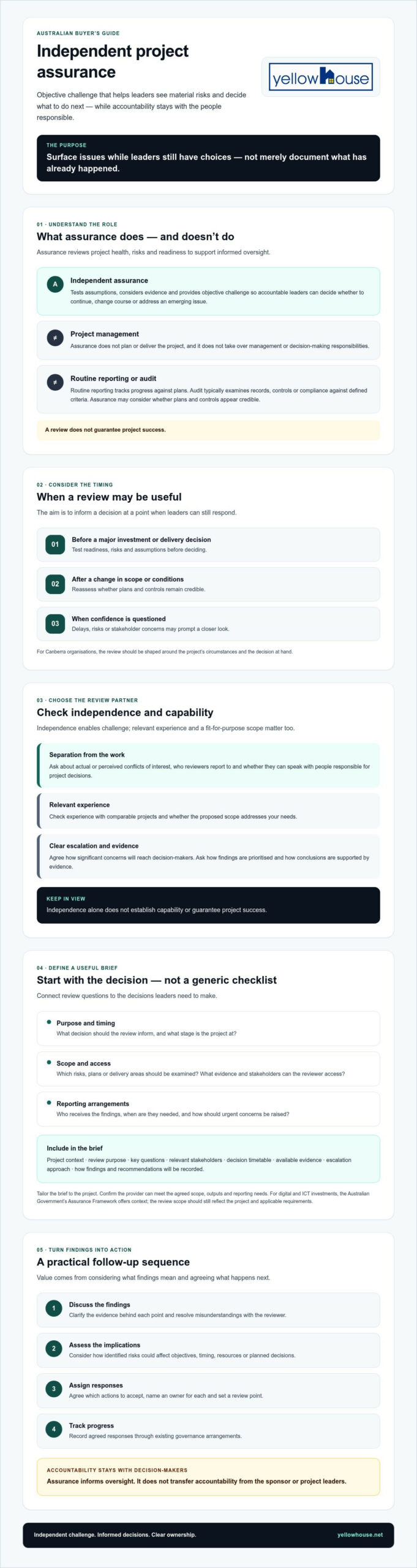
From assurance findings to action: selecting a practical next step
A review creates value when decision-makers consider what its findings mean and agree what to do next. Independent project assurance services inform oversight; they don’t transfer accountability from the sponsor or guarantee delivery outcomes.
Use a straightforward follow-up sequence:
- Discuss the findings: Clarify the evidence behind each point and resolve misunderstandings with the reviewer.
- Assess the implications: Consider how identified risks could affect objectives, timing, resources or planned decisions.
- Assign responses: Agree which actions to accept, name an owner for each and set a review point.
- Track progress: Record agreed responses through existing governance arrangements and revisit them as the project develops.
How should sponsors respond to project assurance findings?
Separate what the review observed from its assessment of risk and any recommendations. This helps sponsors weigh the evidence, understand the implications and decide whether to act, seek clarification or accept a risk. Record the decision and its rationale, actions, accountable owners and follow-up dates through the project’s established governance processes.
Where findings point to broader organisational change, connect project responses with the change context and intended outcomes. Yellowhouse provides strategic change consulting, which may be relevant when considering how assurance insights relate to a wider change initiative.
Yellowhouse also lists Gateway assurance as an advisory service. If you’re considering an independent review, enquire about Gateway assurance and confirm the scope, outputs and delivery approach for your project.
Make assurance findings count in your next decision
Effective independent project assurance services give decision-makers a clearer basis for action, but their value depends on a well-defined review and a considered response. Clarify the decision the review should inform, assess the provider’s independence and relevant experience, then agree how findings will be considered, assigned and tracked.
Assurance supports accountable leaders; it doesn’t take responsibility for delivery or guarantee outcomes. Yellowhouse lists Gateway assurance among its advisory services and also provides strategic change consulting, which may be relevant when review findings connect to a wider change initiative. Confirm the scope and approach that fit your needs.
If you’re considering an independent review, discuss Gateway assurance with Yellowhouse. Start with the decision you need to make and the questions the review should answer.
Frequently Asked Questions
What are independent project assurance services?
Independent project assurance services are objective reviews that help sponsors and governance bodies understand a project’s position and make informed decisions. A reviewer examines relevant evidence, risks and delivery arrangements, then provides challenge and insight. The review doesn’t manage the project or guarantee success. Yellowhouse lists Gateway assurance among its advisory services; confirm the specific scope and approach before engaging.
How do independent project assurance services differ from an audit?
Assurance generally provides a forward-looking view of project confidence, risks and issues that may affect upcoming decisions. An audit usually assesses records, controls or processes against defined criteria, although its scope can vary. Assurance doesn’t replace project management or audit, and it doesn’t transfer accountability from sponsors and delivery leaders. Clarify the purpose and boundaries of each review before commissioning one.
When should a project use an independent assurance review?
Consider a review when a major decision is approaching, project conditions or scope have changed, or emerging delivery concerns need objective examination. Timing matters: a review is most useful when decision-makers can still consider their options. Define the questions the review should address and what evidence is available, then agree how findings will inform governance discussions and next steps.
How do I choose an independent project assurance provider?
Assess relevant project experience, independence, potential conflicts, stakeholder access and how the provider will prioritise and report findings. Check that the proposed scope fits your decision needs, and confirm deliverables and delivery arrangements rather than assuming them. Yellowhouse serves clients in Brisbane, Sydney, Melbourne, Canberra, Adelaide, Perth, Cairns, Townsville, Hobart, Darwin, Mackay, the Gold Coast, Logan, Ipswich and Toowoomba.


About Post Author
