

How to Prepare for a Gateway Review: Australian Guide
A Gateway review isn’t a test of whether your project is flawless. It gives independent reviewers a clear, candid view of progress, risks and decisions that need attention. If you’re wondering how to prepare for a gateway review, first clarify what this specific review will examine. Models, stages and evidence requirements can vary across Australian organisations and jurisdictions.
Preparation can feel pressured when documents are spread across teams, stakeholders are busy and difficult findings seem personal. An accurate account of project status is more useful than a polished story that hides unresolved issues. This guide covers how to confirm the review’s purpose and scope, assemble current evidence and involve the right people. It also explains how to respond to findings and turn recommendations into clear actions, owners and follow-up.
Key Takeaways
- To understand how to prepare for a gateway review, confirm its purpose, scope, timing, criteria and evidence requests with the sponsor or review lead.
- Map requested evidence to the review scope, recording each document’s owner, version, status and any gaps.
- Keep project records current and distinguish confirmed facts from forecasts, decisions and assumptions.
- Consider findings openly, assess their implications and develop proportionate responses with clear ownership.
How to prepare for a Gateway review: clarify its purpose and scope first
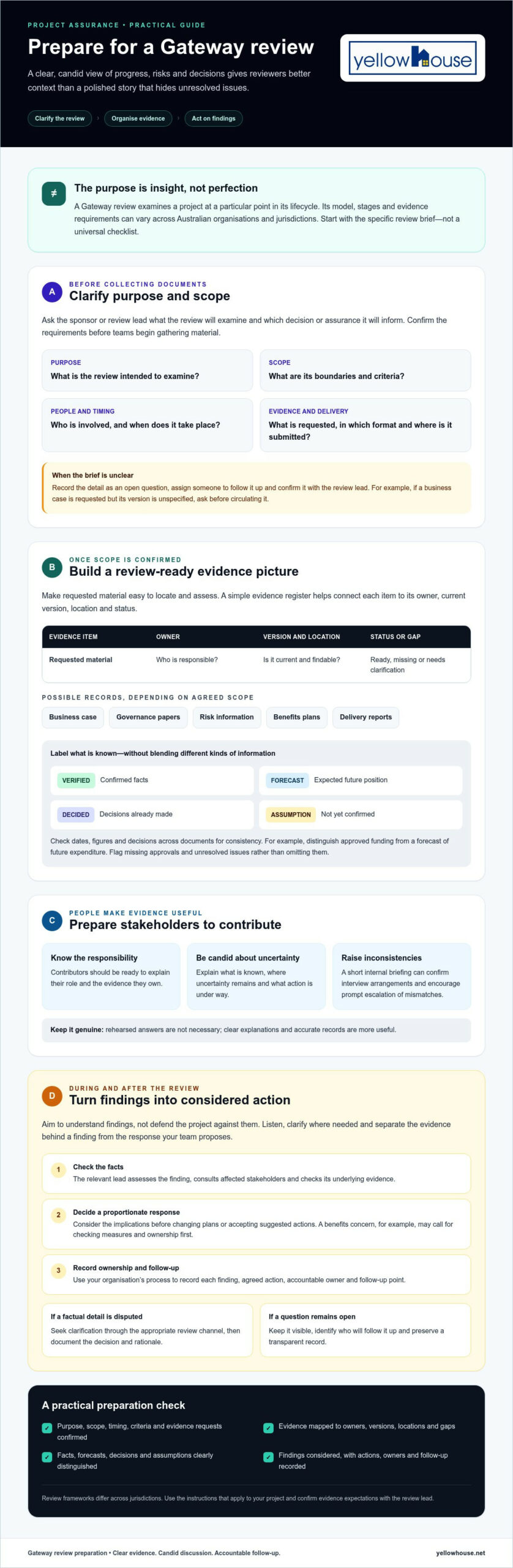
Uncertainty about reviewer expectations can make preparation feel like a search for a universal checklist. Start with the review brief instead. The purpose, scope and evidence requirements depend on the model and organisation involved. Before gathering documents, ask the sponsor or review lead what the review is intended to examine and which decision or assurance it will inform.
A Gateway review examines a project at a particular point in its lifecycle. The broader Phase-gate process describes how staged decisions can provide structure, but it shouldn’t replace your organisation’s review instructions.
What should you confirm in the Gateway review brief?
Check the brief for the review’s objectives, boundaries, participants and expected deliverables. Confirm the timing, assessment criteria and requested evidence with the review lead. Ask about acceptable formats, where to submit material and relevant deadlines. If a detail is missing, record it as a question rather than treating an assumption as a requirement.
- Who can clarify the review’s scope or criteria?
- Which evidence is requested, and how should it be submitted?
- Who owns each unanswered question, and when will they follow it up?
Keep confirmed requirements and open questions in one place. For example, if the brief requests a business case but doesn’t specify which version, ask the review lead before circulating it. This helps prevent teams preparing conflicting material or spending time on evidence outside the agreed scope.
If an external perspective would help your organisation assess its assurance needs, read about Yellowhouse Gateway assurance services. Confirm the relevant review model, scope and evidence expectations with your own sponsor or review lead.
How to organise Gateway review evidence and prepare stakeholders
Once the scope is confirmed, make evidence easy to locate and assess. Create a register that maps each requested item to its owner, current version, location and status. Record gaps or questions so the team can address them before the review. This also helps contributors understand how their material fits into the overall picture.
How can a team make project evidence review-ready?
Use the brief to guide what you collect. Depending on the agreed scope, relevant records may include the business case, governance papers, risk information, benefits plans and delivery reports. Check dates, figures and decisions across documents for consistency. If an approval is missing or an issue remains unresolved, flag it and explain its status rather than omitting it.
Label evidence clearly: identify what is verified, forecast, decided and still an assumption. For example, distinguish approved funding from a forecast of future expenditure. This gives reviewers context without presenting estimates as confirmed outcomes.
Prepare stakeholders to speak to their responsibilities and the evidence they own. Rehearsed answers aren’t necessary; contributors should be ready to explain what’s known, where uncertainty remains and what action is under way. A short internal briefing can confirm interview arrangements and remind people to raise inconsistencies promptly.
Frameworks differ across jurisdictions, so Victorian guidance is a reference point, not a substitute for instructions that apply to a Canberra-based project. The Victorian Gateway Review Process offers jurisdiction-specific material. Confirm your review’s evidence requirements with its lead. If an independent perspective would help your team organise assurance preparation, explore Yellowhouse Gateway assurance.
How to Turn Gateway Review Findings into Action
Prepare to understand findings, not to defend the project against them. A review can help examine delivery concerns and identify useful next steps. Listen carefully, ask for clarification where needed, and separate the evidence behind a finding from the response your team proposes. This keeps discussion constructive, even when a finding is difficult to hear.
Agree who will assess each finding and determine its implications. The relevant lead can check the underlying facts, consult affected stakeholders and recommend a proportionate response. For example, a concern about benefits realisation may call for checking measures and ownership before deciding whether plans need to change. The aim is a considered response, not an automatic commitment to every suggested action.
What should happen after a Gateway review?
Follow your organisation’s process to record each finding, agreed action, accountable owner and follow-up point. If the team disputes a factual detail, seek clarification through the appropriate review channel. Document the decision and its rationale so the record remains transparent. For issues affecting wider change delivery, Yellowhouse change management consulting may provide relevant context.
- Translate each accepted action into a clear task and named owner.
- Record unresolved questions, decisions and the evidence supporting them.
- Set a follow-up point using your organisation’s governance process.
Knowing how to prepare for a gateway review includes being ready to turn feedback into accountable follow-through. If your team would benefit from an independent perspective on the assurance process, explore Yellowhouse Gateway assurance support and confirm its relevance to your review model and circumstances.
Turn review preparation into practical progress
Knowing how to prepare for a gateway review comes down to three essentials: confirm what the review requires, organise clear and current evidence, and involve people who can speak candidly about delivery. Assess each response to findings, assign an owner and follow it up through your organisation’s process.
Preparation doesn’t mean presenting a flawless project. It means making the real position understandable, including uncertainties and issues that need attention. This gives reviewers and decision-makers a sound basis for discussion and helps your team focus on constructive next steps.
Yellowhouse offers independent Gateway assurance and lists local coverage across Brisbane, Sydney, Melbourne, Canberra, Adelaide, Perth, Cairns, Townsville, Hobart, Darwin, Mackay, the Gold Coast, Logan, Ipswich and Toowoomba. Explore Yellowhouse Gateway assurance support to consider whether it may suit your organisation’s needs.
With clear scope, honest evidence and accountable follow-through, your team can approach the review with greater confidence.
Frequently Asked Questions
How do you prepare for a Gateway review?
Confirm the brief, scope, criteria, participants and evidence requirements with the review lead. Map requested material to accountable owners, check that records are current and consistent, and identify gaps early. Prepare contributors to explain their responsibilities, verified facts and uncertainties openly. For a Canberra-based project, follow the arrangements that apply to your organisation rather than assuming a universal process.
What documents are needed for a Gateway review?
Use the review brief to identify required documents, as no single list applies to every Gateway review. Depending on the agreed scope, evidence may include relevant business case, governance, risk, benefits and delivery records. Confirm requested versions and formats with the review lead, then track each item’s owner, status and any gaps in an evidence register.
Who should attend a Gateway review?
Confirm attendees with the review lead rather than relying on a standard list. Invite contributors who can explain areas within the agreed scope or provide and clarify relevant evidence. Make each person’s responsibilities clear beforehand, coordinate their availability and ensure they understand the need for accurate, candid answers. Participants should acknowledge uncertainty or unresolved issues rather than guess.
What happens if a Gateway review identifies issues?
Address findings through your organisation’s agreed governance process. First clarify the evidence and implications, then assign an accountable owner and record the response, actions and follow-up point. If a factual detail is disputed, seek clarification and document the decision and its rationale. Don’t conceal issues. Transparent follow-up helps decision-makers understand the position and determine proportionate steps to manage risk and improve delivery.


About Post Author
