

Managing Multiple Projects Successfully: A Practical Guide
What if projects keep stalling not because your team lacks effort, but because every project is competing for the same people, time and decisions? When deadlines clash, capacity gets stretched and dependencies stay hidden, even capable teams can struggle to keep delivery on track. Managing multiple projects successfully starts with treating them as connected work, not separate task lists.
This guide offers a practical way to prioritise competing demands, make shared capacity and emerging risks more visible, and set a review rhythm that helps your team act before issues escalate. You’ll learn how to align project decisions with organisational priorities and keep work moving without losing sight of dependencies. A structured project-management method such as PeopleCert’s PRINCE2® can support consistent planning and control, while training can help build that capability across the team.
Key Takeaways
- Managing multiple projects successfully means weighing priorities alongside shared capacity, dependencies and clear ownership.
- Use project outcomes, urgency and value to clarify what needs attention first and what can be sequenced later.
- Review milestones, risks and resource demands regularly so emerging conflicts can be addressed before they disrupt delivery.
- Agree how project owners will communicate changes, escalate decisions and keep affected teams informed.
Managing multiple projects successfully starts with shared visibility
Deadline clashes, shifting priorities and limited visibility can turn a group of worthwhile projects into a daily scramble. One team may be needed for two milestones at once, while a decision in one project quietly affects another. Managing multiple projects successfully means aligning priorities, ownership, capacity and progress across related work, so leaders can make informed trade-offs instead of treating every task as equally urgent.
Separate task lists show activity within individual projects, but rarely reveal the whole picture. A shared view brings milestones and dependencies into focus. For example, if a system change must be completed before staff training begins, both project owners can see the connection and respond to slippage early. This portfolio perspective is central to project portfolio management, which considers projects together in relation to broader objectives.
What should a shared project view include?
Keep the overview concise enough to support decisions. For each project, record:
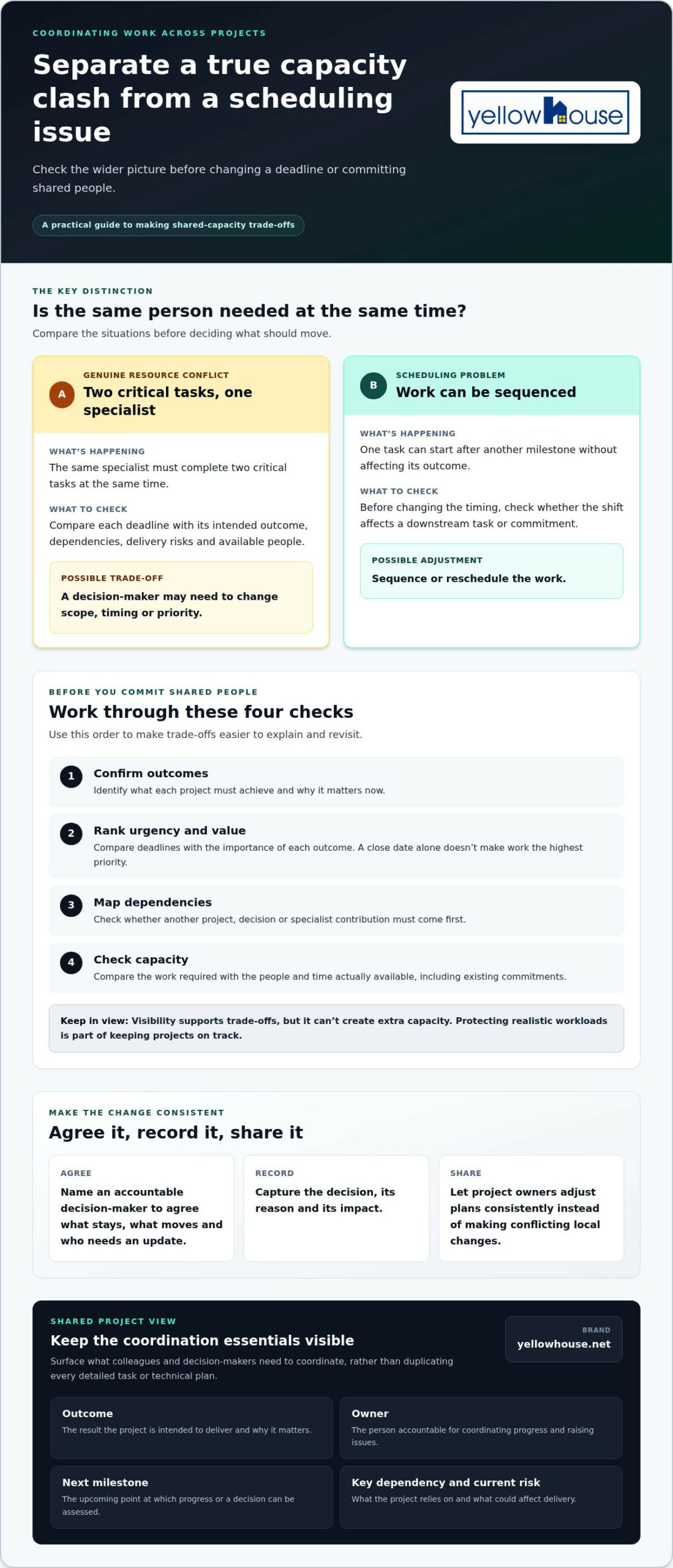
- Outcome: the result the project is intended to deliver and why it matters.
- Owner: the person accountable for coordinating progress and raising issues.
- Next milestone: the upcoming point at which progress or a decision can be assessed.
- Key dependency and current risk: what the project relies on and what could affect delivery.
Leave detailed tasks, working notes and technical plans in the individual project plans. The shared view should surface what colleagues and decision-makers need to coordinate, not duplicate every detail. Multi-project coordination is the practice of aligning shared priorities and capacity so related projects can progress with clear ownership and visible dependencies. A structured method such as PeopleCert’s PRINCE2® can help teams apply consistent planning, control and decision-making, while portfolio-level practices connect project choices to wider priorities.
How to prioritise work and capacity across multiple projects
A practical priority order makes trade-offs easier to explain and revisit. Use this sequence before committing shared people or changing a deadline:
- 1. Confirm outcomes: Identify what each project must achieve and why it matters now.
- 2. Rank urgency and value: Compare deadlines with the importance of each outcome. A close date alone doesn’t make work the highest priority.
- 3. Map dependencies: Check whether another project, decision or specialist contribution must come first.
- 4. Check capacity: Compare the work required with the people and time actually available, including existing commitments.
Then distinguish a genuine resource conflict from a scheduling problem. If the same specialist must complete two critical tasks at the same time, a decision-maker may need to change scope, timing or priority. If one task can start after another milestone without affecting its outcome, sequence or reschedule it. Before making the change, check whether it affects a downstream task or commitment. Visibility supports these choices, but it can’t create extra capacity. Protecting realistic workloads is also part of how teams keep multiple projects on track.
How can teams resolve competing deadlines?
Compare each deadline against its intended outcome, dependencies, delivery risks and available people before changing commitments. Name an accountable decision-maker to agree what stays, what moves and who needs an update. Record the decision, its reason and its impact so project owners can adjust plans consistently instead of making conflicting local changes. This is a practical application of managing multiple projects successfully: choices reflect the wider picture, not just the loudest deadline.
For a structured approach to planning, control and decisions, explore Yellowhouse’s PeopleCert PRINCE2® project management guide.
Build a review rhythm that keeps multiple projects on track
A reliable review rhythm turns new information into timely decisions. Set a recurring review that suits the pace and risk of the work, then use it to check milestones, capacity, dependencies, emerging risks and decisions that need escalation. Keep the discussion focused: what has changed, what does it affect, and who needs to act? Bring the shared project view so people can compare changes across projects rather than relying on separate updates.
Owners should report changes as soon as they could affect another project, rather than waiting for the next meeting. For example, if a delayed approval shifts a shared specialist’s availability, the affected project leads can reassess their plans before the delay spreads. Record agreed actions, decision owners and who needs an update. This helps teams stay aligned without requiring everyone to attend every project discussion.
When does portfolio-level coordination become useful?
Consistent project controls provide a sound foundation for this rhythm. Yellowhouse’s PRINCE2 training overview explains how structured project-management capability can support planning, control and decision-making. For teams managing multiple projects successfully, formal learning can help embed a common approach, while regular reviews keep decisions responsive to changing priorities and capacity.
Put a coordinated delivery approach into practice
Managing multiple projects successfully depends on more than keeping tasks moving. Give teams a shared view of priorities and dependencies, make capacity-based trade-offs openly, and use regular reviews to catch changes while there’s still time to respond.
Build on these practices with a consistent project-management method that supports planning, control and decision-making. Yellowhouse provides accredited PRINCE2® project management training, alongside training in programme and portfolio management frameworks. Training can strengthen the capability behind your approach, while clear ownership and realistic capacity remain essential to delivery.
Explore Yellowhouse project management training and take a practical next step towards more coordinated delivery. With clear priorities and a steady review rhythm, your team can move forward with greater confidence.
Frequently Asked Questions
How do you manage multiple projects successfully?
Managing multiple projects successfully starts with a shared view of outcomes, owners, milestones, dependencies and risks. Rank work against agreed priorities, then check available capacity before making commitments. Review progress regularly, and make deadline trade-offs explicit by recording decisions and telling affected people. This gives project owners a practical basis for coordinating work without treating every task as equally urgent.
How do you prioritise tasks across multiple projects?
Prioritise tasks by assessing the outcomes and deadlines they support, then consider dependencies, risks and available capacity. For example, a task that another project depends on may need to happen before less time-sensitive work, even if its deadline is later. Agree who can make trade-off decisions, identify what can be rescheduled, and revisit priorities as circumstances change.
What is the biggest challenge when managing multiple projects?
A common challenge is balancing competing commitments for the same people, time or resources. Without a shared view, project owners can make sensible decisions for their own work that create clashes elsewhere. Comparing priorities, dependencies and capacity across projects helps leaders spot these pressures earlier, decide what should happen next and communicate the impact to the teams involved.
Can PRINCE2 help with managing multiple projects?
Yes. PRINCE2® provides a structured project-management approach that can support clear responsibilities, planning and decision-making within individual projects. It doesn’t by itself resolve shared-capacity conflicts across a portfolio, so teams may also need programme or portfolio coordination. Yellowhouse provides accredited PRINCE2® training, as well as MSP® and MoP® training for programme and portfolio perspectives, for learners and organisations in Brisbane, Sydney, Melbourne, Canberra, Adelaide, Perth, Cairns, Townsville, Hobart, Darwin, Mackay, Gold Coast, Logan, Ipswich and Toowoomba.


About Post Author
